Kungkuk village, Village Punten, District Bumiaji. Batu
in East Java Province has the potential of natural and exotic environment that
can be developed as an alternative to the tourist town of Batu in addition to
other attractions that have been developed in Batu.

Natural charm and the environment
Kungkuk Hamlet, Village Punten, District Bumiaji, Batu, East Java Province, is a hamlet located in Selecta, Batu city, which has already famous to be one of the tourist attractions in East Java. This hamlet located in the hills with a population of about 49 head of Families with an average job as farmer.
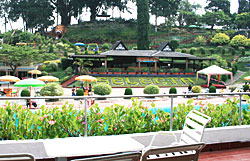
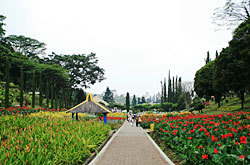
This area, as other surrounding areas, has the charm of the sun risen at the eastern horizon and also has the charm of the sunset in the west. The weather is sometimes shrouded in dense fog, which will add to the strength of the cold atmosphere that is alluring and seductive, gives comfort and beauty to relax and enjoy the view. The rest are residential homes, resorts, cottages, restaurants and even hotel. The other attractions are also fascinating area boundaries with the multi function castle, being a retaining wall slopes as well as sports and travel around the village.
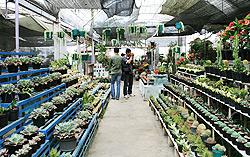
The region has cool temperature so that the various types of cool-temperature plants can thrive with the colors that suit the cool air, thus invite the perfume lovers to make the process of making the smells of perfume from the scent of flowers.

The same goes to the farmers who farm apples, oranges, vegetables, tomatoes, carrots, etc. Which are also grown in line with a cool temperature. It’s nice to pick it and take it as a souvenir and a lovely chance for guests to gardening along with the family.
The sound of birds, chickens, goats, cows and rabbits on the hills add trademarks of a village which will attract the tourists to experience how an animal product being processed.
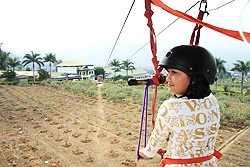
Pine trees that lined the village seemed to limit the wild hills of virgin forest that has a sharp slope that seduced fans of out bond, camping, flying fox, chairlift, mountain sports, mountain bike, car mounts and others. Crackling sound that woke up the people in the morning is the cool water of the river flowing past the village mountains, add to the excitement of rafting enthusiasts.
Source of water coming out of the depths of the forest. The flow support community life. It can also be used for water system so it is ready to drink, water sports or a game of water.
This shows how full the gift of God in this village, it is with gratitude to his Lord, and with a touch of purity and sincerity of the population supporting community development through environmental and natural potential of this enchanting village is possible to be developed into tourist village which is also an alternative development of new Batu city.

Arts
and Culture
Arts and cultural added to the activities of this village: batik craft activities, traditional dance, and traditional song. Creating tourist’s gifts are daily activities for the residents to spend the time other than farming. This activity allows the product to be used as a tourist attraction.
Attitude of harmony and mutual aid societies that are ready to help each other spread of this region makes a major capital strength to build people's economic system and investment. Arts and cultural center is also an option to preserve the culture of this great nation.
Arts and cultural added to the activities of this village: batik craft activities, traditional dance, and traditional song. Creating tourist’s gifts are daily activities for the residents to spend the time other than farming. This activity allows the product to be used as a tourist attraction.
Attitude of harmony and mutual aid societies that are ready to help each other spread of this region makes a major capital strength to build people's economic system and investment. Arts and cultural center is also an option to preserve the culture of this great nation.

Development of Tourism Village Kungkuk
Kungkuk village, Village Punten, District Bumiaji. Batu in East Java Province has the natural potential dan exotic environments that can be developed as an alternative to the tourist town of Batu in addition to other attractions that have been developed in Batu.
The threat of environmental damage around the area of conservation is very high.According to Goodwin (2002), the subsistence of local people still indulge in the activities of selling firewood, theft of other forest products, and wildlife poaching. Greater threat is in areas with high population density and without the ability to entrepreneurship.
Local residents can develop services for specific economic and social environment in their respective areas. The momentum of tradition, culture and exoticism of the local environment can be packaged as a product that can be developed as a tourism and rural tourism to attract visitors from outside the region. Local culture (the State, 2006) in turn would generate incentives to conserve the agricultural production system, the values of tradition, and culture and the environment. It requires the learning process accompanied by the ability of entrepreneurship.
Examine the characteristics of entrepreneurial locals are very useful to produce a model for socio-economic empowerment of local people in ecotourism.Conception of sustainable development need to be implemented at the level of local capacity. Ecotourism is one of the entrances or the relevant real sector in environmental conservation and local culture for the establishment of a tourist village. However, efforts to develop rural tourism with the involvement of local residents is not easy. Entrepreneurship is key in the socio-economic empowerment of communities to enable them to operate services and enjoy prosperity.
.jpg)
Descriptive study by Iwan Nugroho, 2006; State, 2006; Iwan Nugroho and State, 2007) showed that ecotourism services has not been developed satisfactorily. Ngadas villagers, engaged in pilotage services, transportation, and lodging with the quality of services which is limited. The learning process is very important that the local population actually understands the entrepreneurial eco-tourism (Hannu, 2001; Juma and Timmer, 2003). Entrepreneurial success stories in tourism services, such as in Tangkahan (TN Gunung Leuser, Lnagkat), Ceningan village (Klungkung, Bali) or Candirejo (Borobudur, Magelang), demanding a high participation of all stakeholders and the factors or have been successful in attracting tourists to realize the welfare of local residents (iwan Nugroo, 2007). Thus, the development of rural tourism businesses through ecotourism can be interpreted as similar to the farm that can provide jobs and livelihood, as well as generating income and welfare. Empirical experience needs to be explored more deeply in order to identify critical success factors and applied to other rural tourism and ecotourism destination.
The concept of socio-economic empowerment of rural tourism village economy was born of a challenge to implement sustainable development based on social values. In general, the characteristics of entrepreneurship by factors of individuals, communities and governments (Juma and Timmer, 2003; Centre for Rural Entrepreneurship, or CRE, 2003; Suryana, 2004; Burnet, 2000). Social factors are an important component of socio-economic empowerment of rural tourism. According to Juma and Timmer (2003), social learning (social learning) is an important part in which individuals understand the souls of entrepreneurship in the social and economic empowerment of rural tourism.Through the process of participatory learning is measurable public support for the development of new businesses, and rose again invite businessmen who are less fortunate.
HTML Comment Box is loading comments...